Ensuring large quantities of donated food are repackaged into ready-to-eat portions for distribution. Shared Harvest participates in dry and protein bulk repack.
A food bank dry repack program—often referred to as a Bulk Repacking Program—takes wholesale or agricultural dry goods (like rice, beans, pasta, and oats) and safely portions them into family-sized, distributable packages. It lowers costs, reduces food waste, and ensures equitable distribution.
Food banks procure large, commercial quantities (50-pound bags or 2,000-pound totes) of shelf-stable dry items.
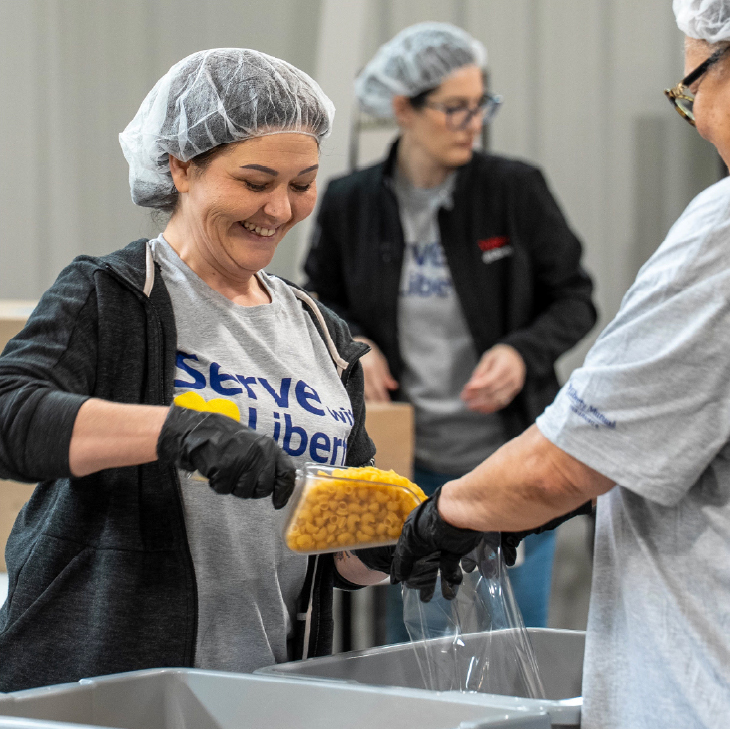
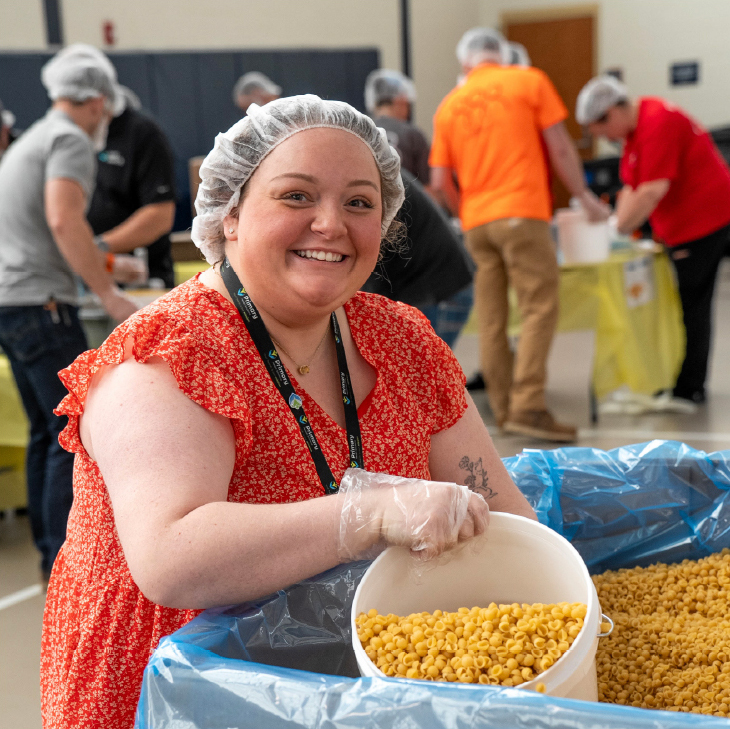
Volunteers work with highly sanitized equipment to scoop, weigh, and seal the bulk product into smaller portions (typically 1 to 2 pound units) using precise measurement methods.
Each repacked item is rigorously labeled with the product name, weight, nutritional contents, and a specific tracking/lot number in case of commercial recalls.
Buying in bulk dramatically reduces per-pound costs, allowing food banks to provide significantly more meals per dollar.
It creates highly rewarding, hands-on volunteer opportunities that require teamwork and precision in the warehouse.
Provides food pantries with neatly organized, shelf-stable groceries that look identical to retail products, making distribution easier and more respectful.
Shared Harvest is privileged to operate one of only 14 Protein Repack Centers in the Feeding America network. Through grant opportunities provided by donors Tyson and Cargill, we have built a program (under USDA grant of inspection), which allows us to repack fresh and frozen poultry, pork, and beef to distribute to our partners.
The Feeding America network recognizes a “protein gap” of approximately 820 million pounds per year. Protein is consistently the most expensive to provide, while being the least donated product.
Understanding Shared Harvest Foodbank operations through the journey of donated food.
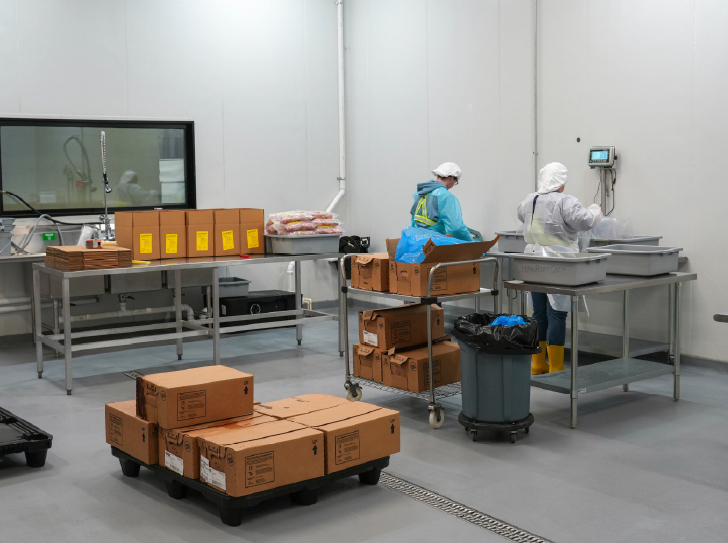
Large combo bins or cases of fresh or frozen proteins are kept at safe, recorded temperatures while they are broken down into family-sized portions.
Employees work with highly sanitized equipment to portion, weigh, and seal the bulk product into smaller bags using precise measurement methods.
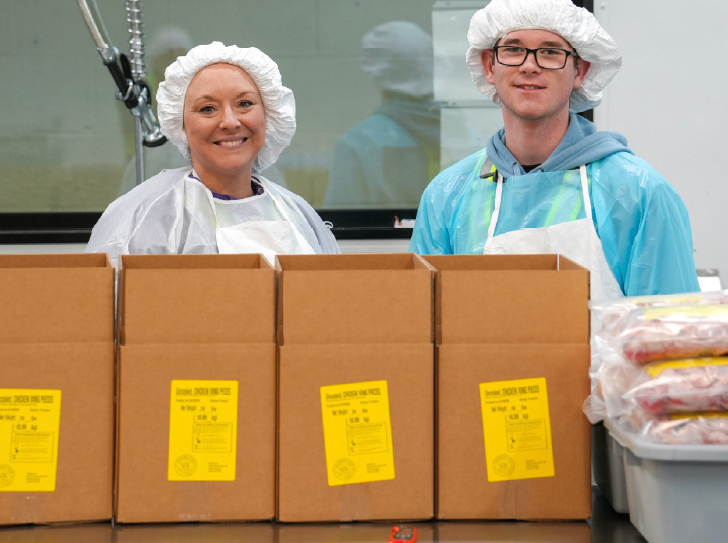
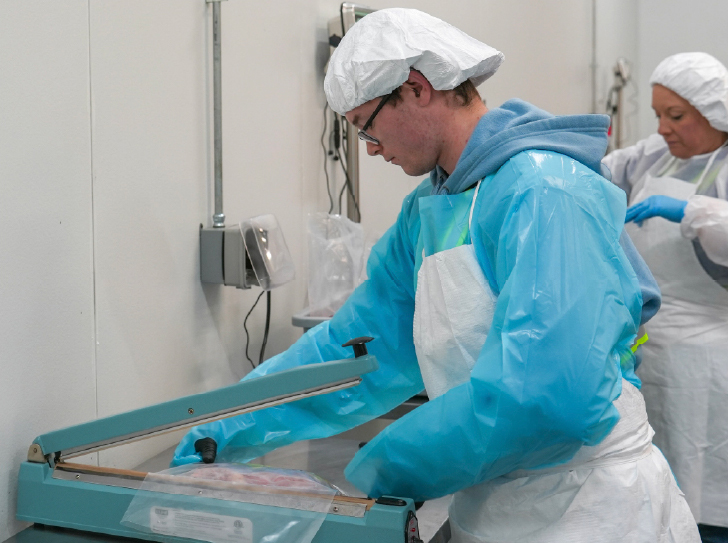
Each repacked item is rigorously labeled with the product name, weight, nutritional contents, and a specific tracking/lot number in case of commercial recalls. All incoming products should be received with proper storage and tracking information, ingredient lists, and nutritional information.
Product, equipment, and surfaces of the Repack Room are regularly tested for harmful microorganisms.
Processing bulk protein dramatically reduces per-pound costs, allowing food banks to provide significantly more meals per dollar.
Food that would otherwise be wasted can be rescued and provided to families.
Provides food pantries with neatly organized groceries that look identical to retail products, making distribution easier and more respectful.
Shared Harvest Foodbank hosts numerous hunger-relief programs to ensure that food is out of landfills and into the hands of those who need it most. View the full list of Shared Harvest programs here.